
Every winter, a closure alert goes out for Skyline Drive, and a fair number of would-be hikers cancel on the spot. They don’t have to. The Drive is a road through Shenandoah National Park, and when ice shuts the road, the trails stay right where they were.
When the Gate Comes Down
The Park Service keeps Skyline Drive open through winter and closes it only for snow or ice. Reopening is rarely quick. Cold settles hard on the ridge, and the park says crews can need several days to reopen the Drive after a storm.
During those closures the Appalachian Trail stays reachable from the park’s entrance stations, and hikers can walk to many other trails from the park boundary. Allysah Fox, the park’s public information officer, told WHSV in 2024 that people can still enter on foot when the Drive closes to cars, and called the opposite belief a common misconception.
Walking in on ice carries its own risk. During a 2021 closure, park spokesperson Sally Hurlbert said hikers were parking at the entrances and walking through, and the park warned that ice can make hiking very dangerous.
Everything You Need Comes In With You
The biggest shift for a first winter visit has little to do with weather.
Commercial services shut down for the season. Fox put it bluntly: the wayside and the lodges close, which leaves “not any food or water sources up inside the park.” Pack as though the only water on the mountain is the water on your back, because that’s true.
Drivers face a version of the same problem. The park’s one fuel station sits at Big Meadows, and Fox said power outages hit it often in winter. The park’s 2024-2025 winter guide adds that weather can disrupt fuel deliveries to Big Meadows Wayside at mile 51, and the gas may run out. Top off in Luray, Elkton, or Waynesboro before you head up.
Ten to Twenty Degrees Colder Than Town
By the Park Service’s count, the ridge runs 10 to 20 degrees cooler than the lowlands, and “what comes down as rain in the valley below can be ice and snow on the mountain.”
That gap fools more people than anything else in this guide. A mild, bright morning in Luray or Elkton says almost nothing about conditions on the crest.
What Goes in the Pack
Start with layers instead of one heavy coat. You’ll build heat on the climb and lose it fast at the first long stop. Carry more food and water than a summer day would call for. The park advises bringing extra layers, water, food, flashlights and a map in case a storm catches you out.
The flashlight earns its place even on a day hike. Short winter daylight leaves little room for a late start or a slow descent, and the park’s winter guide warns that “darkness can sneak up quickly.” Look up the sunset time before you leave the car.
If you buy one piece of gear for the season, make it traction. The Park Service tells hikers to carry microspikes or traction coil devices for their boots. Frozen waterfalls and glazed overlooks draw people up the mountain in January, and that same ice turns a steep descent in ordinary boots into a rescue call.
Plan for No Signal
Cell phones don’t work in most areas of the park, and winter does nothing to help. Coverage is generally available at some west-facing overlooks, which is no comfort at a trailhead tucked into a hollow.
Download offline content in the official NPS App before you arrive. Then tell someone your plan: the trailhead, the route, and when you expect to be back. It takes a minute, and in winter it may be the most useful minute of the trip.
Sleeping Out in the Cold Months
The park’s developed campgrounds run from early spring until late fall, so a winter overnight means the backcountry. That takes a permit bought ahead of time through Recreation.gov, and the permit carries a fee. Campfires are not permitted in the backcountry, so bring a stove and a sleep system rated for the cold.
Check Before You Go
No article, this one included, should be your last word the morning of a hike. Text SHENALERTS to 888777 and the park will send a text any time closures or reopenings happen. The park’s website carries current alerts and conditions as well.
The Payoff
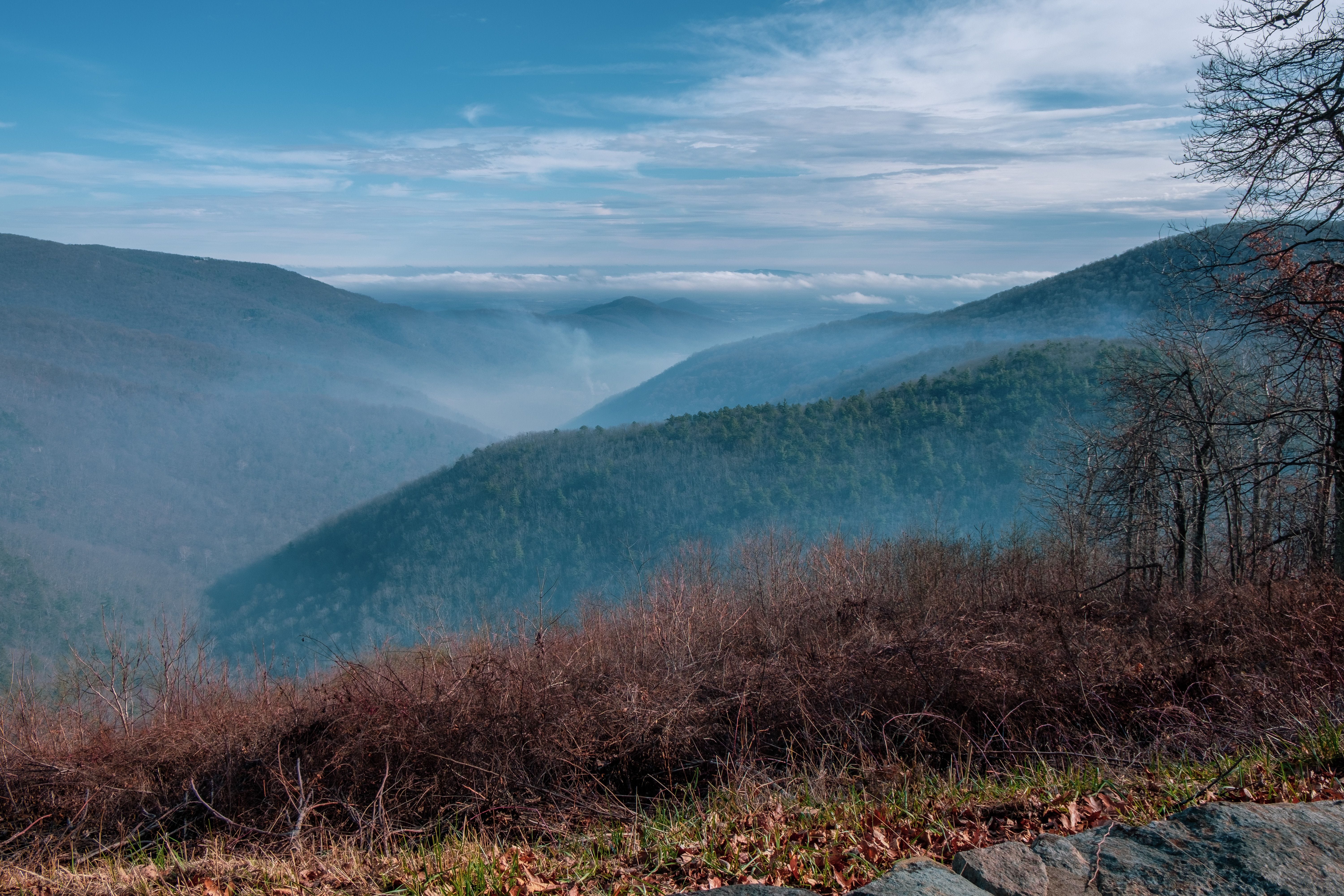
Winter strips the ridge down to its bones. Bare trees open views that summer leaves hide, the parking areas empty out, and a frozen overlook at first light holds a stillness July can’t match. The season requires more planning than a summer hike, keep that in mind.
Skyline Drive conditions change quickly in winter weather. Check current status on Shenandoah National Park’s website or text SHENALERTS to 888777 before heading out.